
Can You Choose Your Own Collision Repair Shop After an Accident
A crash can leave you with a damaged car, a claim number, and a lot of pressure to make fast decisions. One of the biggest questions comes up almost right away: do you have to use the collision repair shop your insurance company recommends?
In most cases, you can choose your own collision repair shop after an accident. Insurance companies may suggest shops in their repair network, but they generally cannot force you to use a specific facility. The shop you choose can affect the repair quality, the parts used, the timeline, and how confident you feel when you get your vehicle back.
This guide explains how that choice works, why insurers recommend certain shops, what to watch for in the claims process, and how to pick a repair facility that will protect your vehicle and your peace of mind.
This article is for general information only. Insurance rules and consumer protection laws vary by state, so check your policy and your state’s insurance department if you need guidance for a specific claim.

You usually have the right to choose the repair shop
After an accident, the vehicle owner usually has the right to decide where the car will be repaired. That means you can choose a dealership body shop, an independent collision center, or a specialty repair facility that works with your vehicle make.
The insurance company’s role is different. The insurer decides what it will pay under the policy and claim. It can inspect the damage, write an estimate, negotiate repair costs, and issue payment based on covered losses. But choosing the shop is generally the owner’s decision.
That distinction matters.
A shop recommended by the insurer may be convenient, but convenience is not the same as a requirement. If a claims representative says, “We work with these shops,” that is a recommendation. If they say repairs will only be covered at one of those shops, ask them to show where your policy says that.
You can also ask direct questions, such as:
Am I required to use a shop from your network?
Will you still pay the covered claim if I choose my own shop?
Will choosing my own shop affect the warranty on the insurance estimate?
Who handles any repair issues after the work is complete?
Keep notes of these conversations. Write down the date, the representative’s name, and the main points discussed. If something sounds unusual, ask for it in writing.
Some states have specific rules against “steering,” which means pushing a customer toward a preferred repair shop in a way that limits choice. The exact rules vary, but the general idea is simple: a recommendation should not become pressure.
Why insurance companies recommend certain shops
Most major insurers have direct repair programs, often called DRPs. These are networks of collision shops that have agreements with the insurance company. The shop may follow certain estimating, billing, communication, or service standards set by the insurer.
There are real benefits to these programs. A network shop may already be set up in the insurer’s system, which can make claim communication faster. Some insurers also offer a repair guarantee when you use one of their preferred shops.
That can be helpful, especially for smaller claims and straightforward repairs.
Still, a preferred shop is not automatically the best shop for your vehicle. The agreement between the insurer and the shop may involve pricing rules, parts preferences, cycle time expectations, and documentation requirements. Those details can affect the repair plan.
A good repair starts with what the vehicle needs, not only what the first estimate lists.
Insurance estimates often begin as visual inspections. Hidden damage may not appear until the shop removes bumpers, panels, lamps, trim, or interior pieces. That added damage is usually handled through a supplement, which is a request for more payment after additional repair needs are found.
A strong shop will document the damage clearly, submit supplements with photos and repair procedures, and communicate with the insurer. A weak shop may rush the process, miss structural issues, or avoid necessary conversations because they do not want delays.
When deciding between an insurer-recommended shop and your own choice, look beyond the name on the list. Ask how the shop handles:
Hidden damage found after teardown
Structural measuring and calibration needs
Advanced driver assistance system repairs
OEM repair procedures
Paint matching and refinishing
Parts quality and availability
Written repair warranties
The goal is not to fight the insurance company. The goal is to make sure the repair is complete, safe, and properly documented.

A lower estimate does not always mean the full repair cost
One of the most confusing parts of collision repair is the estimate. Many drivers see two different numbers and wonder which one is “right.”
The answer is that the first estimate is often only a starting point.
A field adjuster or photo estimate may capture visible damage, such as a dented bumper, broken grille, or cracked headlamp. Once the shop disassembles the vehicle, it may find bent brackets, damaged sensors, broken tabs, wiring issues, or impact damage behind the visible panel.
That does not mean anyone acted improperly. It means the full damage was not visible at first.
Here is how the process often works:
Step | What usually happens |
Initial estimate | The insurer or shop documents visible damage and writes the first repair plan. |
Vehicle teardown | The shop removes damaged parts to inspect the structure and hidden components. |
Supplement request | The shop sends additional documentation to the insurer for review. |
Approval and parts ordering | The insurer reviews the supplement, then the shop moves forward when approved. |
Repair and quality check | The shop repairs, refinishes, calibrates, and inspects the vehicle before delivery. |
If you choose your own shop, the insurer may still send an adjuster or ask for photos, invoices, and documentation. That is normal. The shop and insurer may negotiate labor times, repair methods, or part choices.
This is where a skilled collision repair shop helps. The best shops know how to document why a repair is needed. They can point to manufacturer repair procedures, show photos of hidden damage, and explain when a part should be repaired or replaced.
You should also know that payment can work in different ways. Some insurers pay the shop directly if you authorize it. Others send payment to you, to the lienholder, or to both you and the shop. If your vehicle is financed or leased, the lender may have rules about repairs and payment processing.
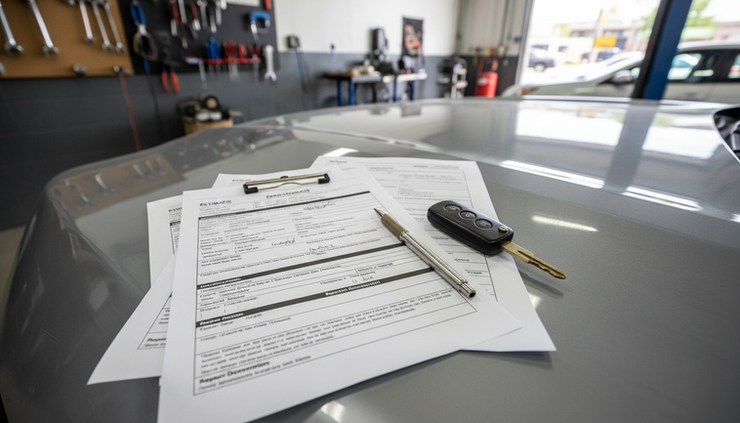
Before repairs begin, ask the shop for a written authorization form and review it closely. Make sure you understand:
What work is approved
Whether the shop charges storage fees
Whether there are teardown or diagnostic charges
How supplements are handled
Who receives the insurance payment
What happens if the vehicle is declared a total loss
A reputable shop will answer those questions before taking the vehicle apart.
Parts, calibrations, and repair methods deserve attention
Modern vehicles are not simple metal shells. Bumpers can hide radar sensors. Windshields may work with camera systems. Quarter panels can involve bonded materials, specialized welding, or required corrosion protection. Even a seemingly minor hit can affect safety systems.
That is why the shop’s repair approach matters.
One common issue is parts selection. Depending on the policy, insurer, vehicle age, and state rules, an estimate may include different types of parts.
Common categories include:
Original equipment manufacturer parts
Aftermarket replacement parts
Recycled parts from another vehicle
Reconditioned or remanufactured parts
OEM parts come from the vehicle manufacturer. Aftermarket parts come from another company. Recycled parts are used original parts, often from a salvage vehicle. Each type can be acceptable in some situations, but fit, finish, safety, and warranty coverage can vary.
If you prefer OEM parts, say so early. Your policy may or may not pay for them in every situation. Some insurers offer OEM parts endorsements for an added premium. Without that coverage, you may be responsible for the difference if you insist on OEM parts when the insurer only owes for another part type under the policy.
Calibrations are another major point. Many vehicles have advanced driver assistance systems, including lane departure warnings, adaptive cruise control, blind spot monitoring, parking sensors, and automatic emergency braking. Repairs near cameras, radar units, bumpers, mirrors, suspension, or windshields may require calibration.
A shop should know when calibrations are required and how to document them. Skipping this step can leave a vehicle with systems that appear normal but do not perform as designed.
Ask the shop questions like:
Do you follow manufacturer repair procedures?
Do you perform calibrations in-house or use a qualified sublet provider?
Do you scan the vehicle before and after repairs?
Will I receive documentation of completed calibrations?
What warranty do you provide on labor and paint?
The answers do not need to be complicated. Clear, confident explanations are a good sign. Vague answers are not.

How to choose a collision repair shop with confidence
The best time to choose a shop is before a tow truck, insurer, or stressful deadline pushes you into a rushed decision. Even after an accident, you can slow the process down enough to ask the right questions.
Start with reputation, but do not stop there. Reviews can reveal patterns, especially around communication, repair quality, delays, and how the shop handles problems after delivery. Look for detailed reviews rather than generic praise.
Certifications can also help. Some shops maintain manufacturer certifications or training for specific vehicle brands. These programs may require tools, equipment, training, and repair procedure access. Certifications are not the only sign of quality, but they can matter for newer vehicles, luxury vehicles, EVs, aluminum body structures, and advanced safety systems.
Also look at the shop’s process. A well-run collision center should be able to explain the repair path in plain language. Staff should tell you what happens after drop-off, when teardown begins, how updates are provided, and how supplements are handled.
A good shop will not promise that every repair will be fast. Parts delays, supplement approvals, and calibration scheduling can affect timing. What matters is whether the shop communicates clearly and avoids unrealistic promises.
Before choosing, compare these practical points.
What to check | Why it matters |
Written warranty | Shows what the shop stands behind after delivery. |
Estimate process | Explains how hidden damage and supplements are handled. |
Repair procedure access | Helps confirm the shop follows manufacturer guidance. |
Equipment and training | Matters for structural repairs, welding, scanning, and calibration. |
Communication style | Reduces stress during a claim that may last days or weeks. |
Parts policy | Helps avoid surprises about OEM, aftermarket, recycled, or reconditioned parts. |
If your car is still drivable, visit the shop before committing. Look for a clean, organized repair area, but do not judge only by appearance. Ask how many similar vehicles the shop repairs and whether it has handled your type of damage before.
If the vehicle has already been towed to a storage yard or a shop you did not choose, you can often move it. First, ask about storage fees, release forms, and towing costs. Insurance may cover reasonable towing and storage in covered claims, but delays can create disputes. Act quickly once you decide where the vehicle should go.
What to do if an insurer pushes back
Most claims move forward without major conflict. Still, some drivers feel pressured when they choose a shop outside the insurer’s network.
Pushback can sound like this:
“We cannot guarantee the work if you go there.”
“You may have to pay the difference.”
“Our shop can start sooner.”
“That shop charges more than we approve.”
“We only work directly with our preferred shops.”
Some of these statements may be true in context. For example, an insurer may only offer its own repair guarantee through preferred shops. A shop outside the network may charge labor rates the insurer disputes. A preferred shop may have faster administrative access to the claim.
That still does not mean you lose the right to choose.
If the insurer challenges your selected shop, stay calm and keep everything documented. Ask the adjuster to explain the issue in writing. Then ask your shop how it plans to respond.
The most common disputes involve labor rates, repair versus replacement decisions, parts type, repair procedures, diagnostic scans, calibrations, and storage charges. These disputes usually come down to documentation and policy language.
You can take these steps:
Review the estimate line by line
Ask the shop to explain differences between its estimate and the insurer’s estimate.
Ask for written explanations
Verbal statements are easy to misunderstand. Written answers create a clear record.
Check your policy
Look for language about parts, payment limits, appraisals, and claim disputes.
Escalate within the insurance company
A supervisor or claims manager may be able to review the file.
Contact your state insurance department
If you believe the insurer is violating state rules, the department can explain complaint options.
Use the appraisal clause if available
Some policies include a process for resolving disputes over the amount of loss.
A strong repair shop will help explain repair needs, but it should not give legal advice unless qualified to do so. If a claim becomes serious, involves injuries, or creates a large financial dispute, consider speaking with an attorney or a licensed insurance professional in your state.
The best choice is the shop that protects the repair
Choosing a collision repair shop is not only about convenience. It affects how the damage is documented, which repair procedures are followed, what parts go on the vehicle, and how issues get handled after the car leaves the shop.
Insurance networks can be useful, and many preferred shops do good work. But the final decision should come from confidence, not pressure. Ask questions. Read the paperwork. Make sure the shop can explain the repair plan, supplements, parts, calibrations, and warranty.
After an accident, the car may look like the biggest problem. The bigger issue is making sure it is repaired correctly. Choose the shop that gives you clear answers, follows proper procedures, and treats the repair like your safety depends on it, because it does.
This content was created by Two Four Media for informational and marketing purposes. For questions about services, pricing, warranties, availability, or your specific vehicle, please contact Wreck Center directly.


Comments